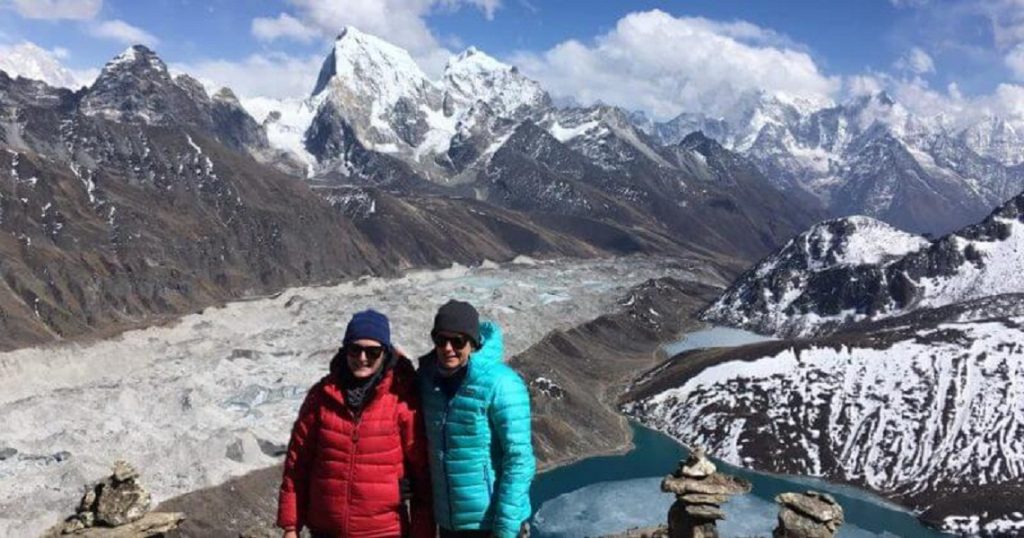
A fantastic journey to the wild and unexplored vicinity located north of Annapurna, this rugged and wild trek takes us to the exotic and enthralling valley of Nar Phu. Nar Phu Valley trek starts from Jagat following the popular trekking routes of Annapurna Circuit trail and then branch off from Koto to follow the off the beaten track to Nar Phu valley in the north of Manang and pass the Kang La pass with magnificent panorama of Annapurna massifs. The Kang La pass links Nar with Manang and three other Bhotia villages in the Neyshang valley. The valley system above opens up to a huge expanse of high snow-peaks, ancient villages and high altitude grazing settlements. Trekking to this hidden mountain valley offers medieval Tibetan culture in undisturbed form, dramatic mountains view and great alpine sceneries. We then head west over the Thorong La Pass and down through lower Mustang before heading on to Jomsom. We finally fly back to Pokhara and drive back to Kathmandu next day.
(Kathmandu – Besisahar ) (Besisahar- Dharapani ), (Muktinath- Pokhara )(Pokhara- Kathmandu)
Our tour guide or any representative team from Adventure Gandaki Treks and Expedition will pick you up and drop you to the Hotel in Thamel, Kathmandu.
You begin a long but scenic drive via Besisahar and Jagat, covering roughly 230 km in 8–10 hours. The road winds along rivers, terraced hills, and villages before reaching Dharapani, the gateway to the Manang region, where you stay overnight.
Today’s trek covers approximately 15 km and takes 5–6 hours. You pass through Bagarchhap, Danaque, Timang, and Latamarang, enjoying forest trails and mountain views. The gradual ascent helps with acclimatization before reaching the riverside village of Koto.
In the morning, we register our restricted area permit at the Police Check Post. Then we trek through the River bank of Soti Khola again through wonderful pine forests, streams and suspension and reach Dharmasala. We have our packed lunch on the way. We then continue the trek through forests and ascend steeply towards Meta village. Finally we arrive on the Tibetan Plateau where we have a very good view of Annapurna II and Lamjung Himal. Overnight in Meta.
We start our day traversing up and down and crossing suspension bridges over different streams. After almost 4 hours of trek we reach Kyang where we can see the remnants, particularly the ruined forts of the Khampa settlement (the place which Khampa refugees from Tibet once captured and lived). We further keep walking past the Phu Khola on a rocky trail and finally reach the Phu village in another 3 to 4 hours. Overnight in Phu Gaon.
Today is the scheduled acclimatization day whereby we are suggested to rest and get acclimatized with the altitude. As we are in the Lost/Hidden Valley, we can explore the culture, natural diversity, and religious practices of the ethnic groups like Lama, Gurung and Ghale in here. Besides this, we can trace out how people make their survival depending on agriculture, animal breeding and seasonal migrations in such remote location or in the hidden valley. It is also the day for us to explore the Tashi Lakhang Monastery – the old Buddhist Monastery listed out of the 108 world’s great Buddhist Monasteries; it is supposed to be the last monastery constructed by Karmapa Rinpoche. Apart from exploring the cultural avenues of the lost valley, the valley also offers us a great view of Himlung Himal and other snow peaks in the region. Overnight at Phu Gaon.
The trail descends passing many streams and suspension bridges until Mahendra Pul which takes about 4 hours. We pass the high suspension bridge 80m over the Gorge of Lapche River. We have lunch in Mahendra Pul. After lunch, the trail steeply ascends passing many Buddhist stupas until Nar Village which takes about 2 hours. We find several Buddhist Monasteries here to visit coupled with the glorious vistas of Pisang Peak and other small peaks. Overnight in Nar.
This is the second scheduled acclimatization/rest day for this trek. We spend the day taking a day hike nearby and explore Nar village and have a close look over the local culture and lifestyle. We also prepare for the trek next day. Overnight in Nar.
Today is adventurous day with long day hike so we get up early in the morning and head to Kangla pass. From pass we can see the Annapurna massif. We further trek down to Ngwal from there. Overnight in Ngwal.
From Ngwal, we head for Manang today. We pass through the isolated village of Paugh overlooking the amazing views of Annapurna range. We then move gently uphill to Mungli and then to the main trail of Annapurna Trail at Mungli. We eventually reach Manang, where we set up our camps for overnight stay. Overnight in Manang.
You trek around 9 km in 5 hours, following river trails and forested paths before ascending a ridge to Shree Kharka. The gradual climb prepares you for higher elevations ahead.
Covering approximately 7 km in 5 hours, today’s trail climbs steeply through juniper bushes and high alpine terrain. You arrive at Tilicho Base Camp, surrounded by dramatic Himalayan walls.
A memorable day with a 6–8 km hike taking 5–6 hours. You ascend to Tilicho Lake, one of the world’s highest lakes, then descend back past Tilicho Base Camp to Khangsar for overnight stay.
This scenic trek of about 8 km takes 4–5 hours, descending through Yak Kharka, juniper forests, and yak pastures while maintaining a comfortable pace before the next major pass.
A short but important acclimatization trek of roughly 5 km in 3 hours, positioning you at Thorung Phedi in preparation for crossing Thorong La Pass the following day.
The toughest day of the trek covers about 16 km and takes 8–9 hours. A steep pre-dawn ascent leads to Thorong La Pass, followed by a long descent to Muktinath, with panoramic views of Dhaulagiri, Annapurna, Tukuche, and Gangapurna.
You drive approximately 170 km in 8 hours, combining rough mountain roads and highway travel. Pokhara’s lakeside setting offers a relaxing contrast after days in high alpine terrain.
A scenic drive of around 200 km takes 5–6 hours, following river valleys and hill roads back to Kathmandu. In the evening, you enjoy a farewell dinner celebrating the successful completion of the trek.
You are transferred to Kathmandu International Airport (approx. 6 km / 20–30 minutes) for your onward international flight, marking the end of your Nar Phu Valley, Tilicho Lake, and Annapurna Circuit adventure.
Your accomodation in a trek will be on twin sharing basis. Your hotels in mountains while on trek will be very basic standard. We it as a trekkers lodge/tea houses. Tea houses wont be very luxurous as on the cities but beds will be comfortable . we will provide you with the best standard type hotel available in the area.
Food is of a very good quality, and we recommend you try local foods such as dal bhat (lentil stew with rice and curried potatoes or meat), boiled potatoes with chilli sauce, Sherpa stew (meat, potatoes, vegetables in a rich sauce) or curry with rice. These are the staple foods for Sherpa people but every lodge will also offer a wide range of western meals:
Breakfast – Eggs (fried, boiled), omelettes, toast, pancakes, Tibetan bread, muesli, porridge, tea, coffee, chocolate.
Lunch/dinner – Soups (tomato, garlic, vegetable, mushrooms etc), veg fried rice, dal bhat, curry w/rice, noodles (mix fried, veg, egg, w/cheese), macaroni, spring rolls (veg, egg, cheese, mixed), momo (boiled or fried mini pasties with either veg or meat), pizza (all types), fried potatoes (w/veg or cheese), chips, buff steak (water buffalo, occasionally yak), lasagne.
Dessert – apple pie, fruit cocktail, chocolate cake, rice pudding, snickers pie!
The Essentials
Optional
Nepal Trekking Season generally known best as two seasons after falls and after the winter. The following month mid of September to mid of December consider ever best season of trekking in Himalayas. During this period of months have pleasant climate condition not so hot and cold and visibility of mountain are crystal clear. There is another best season of trekking Nepal after winter when sun getting more warmer in spring time may trekkers to Himalayas can again enjoy comfortable climate condition.